
Virtual Try-On / 11 min read / 1897 words
How AI Virtual Try-On Reduces Fashion Returns by 35%
Zalando proved the methodology. VTS brings the same return-reduction logic to Shopify stores with body scanning, fit heatmaps, and virtual try-on.
Online fashion does not have a browsing problem. It has a confidence problem.
Shoppers know what they like. They can find the dress, jacket, jeans, or activewear set that catches their eye. They can compare colors, read fabric notes, zoom into stitching, and look at model photos. Then the same question kills the sale or creates the return: will this actually fit me?
That single question is why fashion returns stay so brutally expensive. The VTS position is simple: returns do not start after delivery. Returns start on the product page, at the exact moment a shopper has to guess. If the shopper guesses small, the product comes back. If the shopper guesses large, the product comes back. If the shopper orders two sizes and plans to return one, the merchant pays for the uncertainty twice.
AI virtual try-on reduces returns because it moves the decision from guessing to seeing. Body scanning turns the shopper into the reference point. A fit heatmap turns the size chart into a visual answer. Photorealistic try-on turns the product image from a mannequin fantasy into something personal. Put those together and the shopper can buy with confidence before the box leaves the warehouse.
The 35% number matters because it points to a method
The claim is not that one shiny widget magically erases every return. Fashion returns happen for more than one reason: late delivery, fabric feel, damaged items, buyer remorse, product photography mismatch, and plain old changed minds. But sizing is the largest pressure point. VTS focuses directly on that pressure point because 52% of online fashion returns happen because of sizing issues.
Zalando implemented a comparable fit recommendation methodology and reduced returns by 35%. That number matters because it gives merchants a grounded way to think about the upside. If a store is paying $15 to $30 per returned item in shipping, restocking, and lost margin, even a partial reduction changes the economics of the business. A return is not just a refund. It is a logistics event, a customer support event, a margin event, and often an inventory-quality event.
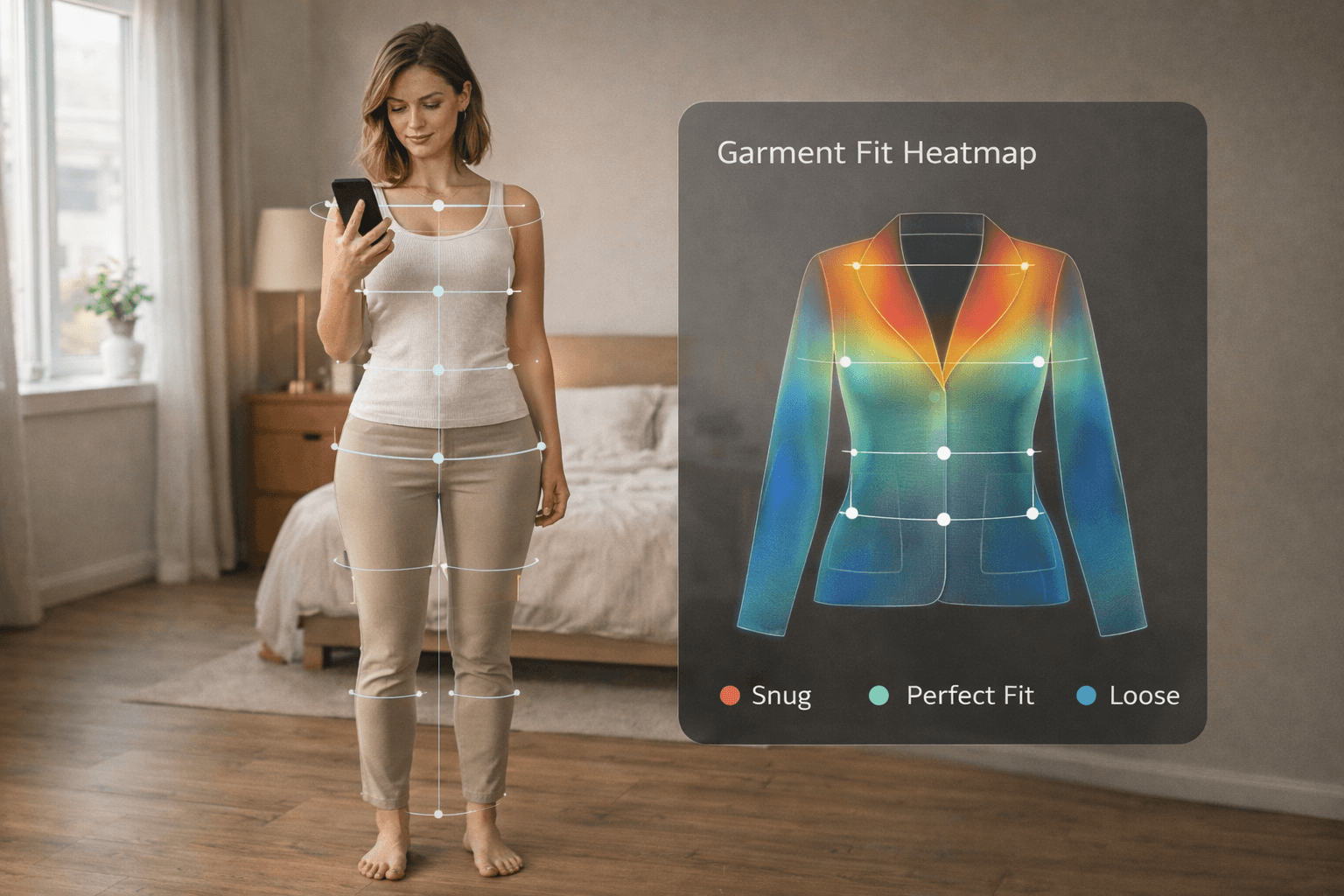
VTS brings that methodology to Shopify stores in a way that does not require a data science team or a custom enterprise integration. The shopper enters height, weight, and gender. They take two full-body photos, front and side, while standing about 1.5 meters from their phone camera in fitted clothing. The AI extracts more than 20 measurements, matches those measurements to the merchant's size chart, and generates a recommendation with a fit heatmap.
The important part is not the novelty of the scan. The important part is the full loop. VTS does not stop at "you are probably a medium." It shows where the garment is likely to feel snug, perfect, loose, or tight. That is the difference between a generic size recommender and an actual fit engine.
Virtual try-on attacks the emotional reason shoppers hesitate
Sizing is technical, but hesitation is emotional. A shopper may know that the recommended size is medium and still wonder whether the cut looks right on their body. The model on the product page might be taller, shorter, wider, narrower, younger, older, or simply styled in a way that does not match the shopper's own life.
Virtual try-on gives the shopper a stronger answer. They generate a photorealistic image of themselves wearing the product. Not an avatar. Not a cartoon. Not a generic model with similar measurements. Their actual body, in the merchant's actual product.
That matters because a lot of returns are not "the size chart lied." They are "I could not picture myself in this." When a shopper can see the jacket on their shoulders or the dress on their shape, they make a cleaner decision. They buy the item they believe in. They skip the item that was never going to work. Both outcomes save the merchant money.
The VTS copy says virtual try-on reduces returns by an additional 12% on top of size recommendation alone. That makes sense because the two tools solve adjacent doubts. AI Size Finder answers "what size should I buy?" Virtual Try-On answers "will I like how it looks on me?" A merchant needs both because the shopper asks both.
The old size chart is not enough
Generic size charts fail because they ask the shopper to translate brand language into body reality. Small, medium, and large mean different things across different brands. Even inch-based size charts are incomplete because they assume the shopper has a tape measure, knows how to measure themselves, and will measure consistently.
Most shoppers will not do that. They guess. They rely on the last brand they bought from. They read reviews looking for phrases like "runs small" or "true to size." They order multiple sizes and return the extras. The merchant then pays for a customer experience problem that the size chart never solved.
VTS changes the sequence. Instead of making the shopper interpret a chart, the AI interprets the shopper. It captures chest, waist, hips, inseam, shoulder width, arm length, and other fit-relevant measurements from two images. Then it compares those measurements against the product data. The output is not a wall of numbers. It is a recommendation shoppers can understand.
This is why the heatmap matters. A fit heatmap turns uncertainty into a visual. Green means the garment is expected to sit well. Yellow means snug. Red means tight. Other zones can show looseness. The shopper no longer has to decode a measurement table while half-watching their cart timer. They see the fit story immediately.
Confidence changes buying behavior
The best return reduction does not feel like restriction. It feels like confidence. If a store makes shoppers feel interrogated, they will leave. If a store makes shoppers feel measured, understood, and protected from a bad purchase, they keep moving.
That is why VTS is designed to work inside the buying moment. It is not a separate consultation. It is not a quiz with twenty vague questions. It does not ask shoppers to describe their body shape in language that feels awkward or imprecise. It asks for a small number of inputs and two photos, then it returns a specific answer.
This changes the shopper's decision from "I hope this works" to "this size is recommended because this garment matches these measurements." When that shopper reaches checkout, the cart is cleaner. They are less likely to over-order. They are less likely to treat the merchant as a free fitting room. They are more likely to keep what they buy.
That is the real mechanism behind the return reduction. The shopper is not being persuaded with a discount. They are being given enough information to make the right decision the first time.
The merchant gets more than a lower return rate
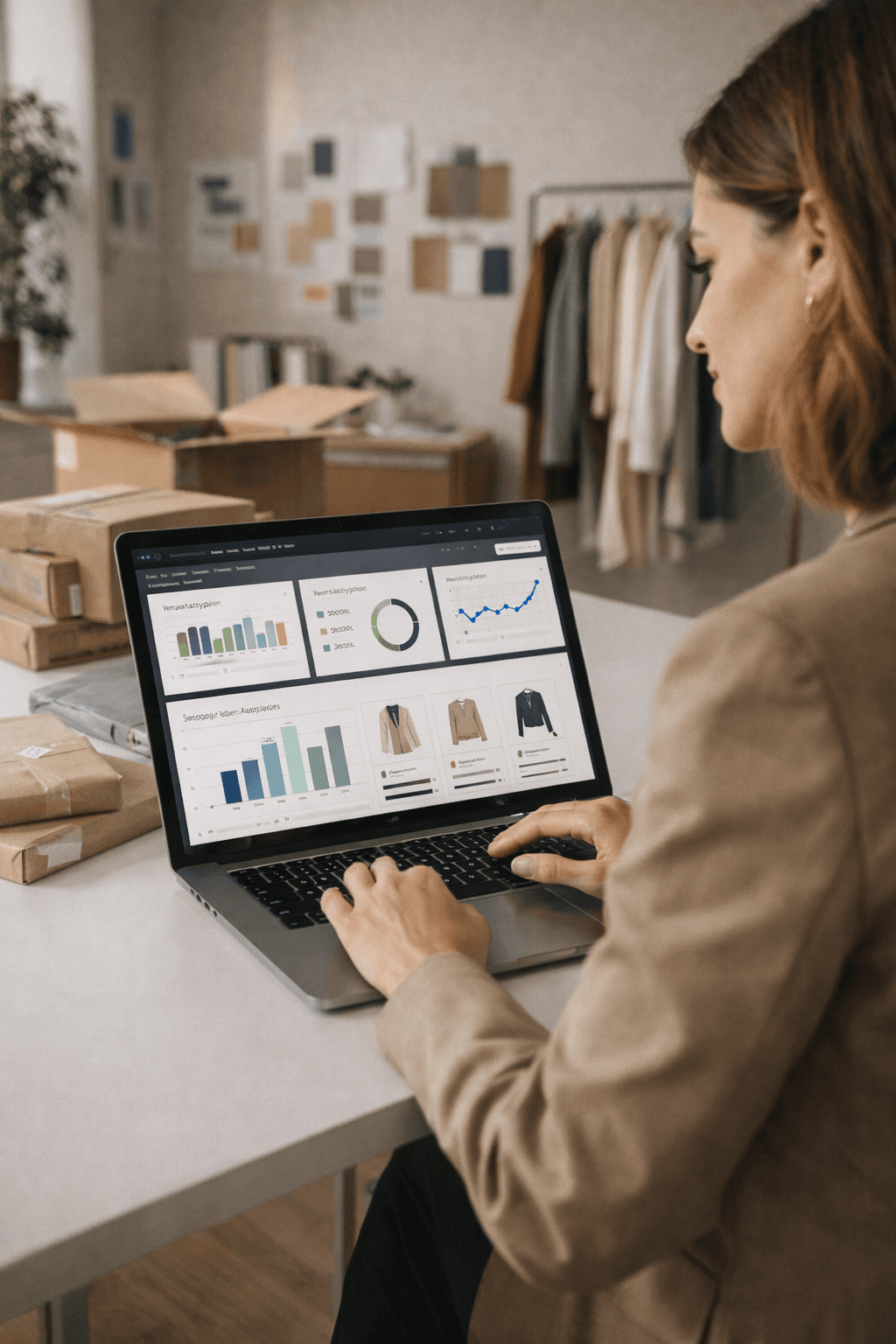
Return reduction is the headline, but the analytics layer is where the long-term compounding starts. VTS gives merchants a dashboard with revenue impact, active customers using size finder and try-on, conversion lift since installation, scans completed, try-ons generated, high-demand articles, return reason analysis, and size distribution.
That data matters because it tells merchants what shoppers are actually doing. A store might discover that one product receives a huge number of try-ons but still has lower conversion. That can point to photography, pricing, styling, or fit expectations. Another product might generate many size scans in one size range, revealing demand the merchant underestimated. Return reason analysis can expose the remaining problems that AI fit guidance does not solve.
In other words, virtual try-on is not just a shopper-facing widget. It is a merchandising signal. Every scan and try-on tells the merchant where confidence is high, where confidence is missing, and where product data needs to improve.
This is how the system becomes more than a returns patch. It becomes a feedback loop between shoppers, product pages, inventory decisions, and merchandising strategy.
A practical rollout for Shopify teams
The VTS rollout is intentionally short because the tool only works if merchants actually launch it. Install from the Shopify App Store. Upload size charts or let AI auto-detect from product data. Set brand preferences. Go live. The VTS widget appears on product pages so shoppers can start scanning, trying on, and buying with more confidence.
That five-minute setup matters because the teams most crushed by returns are often the teams with the least engineering bandwidth. A founder running a lean apparel store cannot wait through a three-month enterprise integration. An operations director trying to reduce losses before the next collection drop needs something live now. A marketing lead trying to generate more user content needs the try-on images available where shoppers already are.
Once the widget is live, the merchant should watch three numbers first: scan completion, try-on generation, and return rate by product. Scan completion shows whether shoppers understand the flow. Try-on generation shows whether shoppers are using the emotional confidence layer. Return rate by product shows where the system is having the biggest impact and where product-level issues remain.
If a product has high scans and lower returns, the fit engine is working. If a product has high scans and persistent returns, the merchant should inspect the product data, the size chart, and the promise made by the photography. VTS helps reveal that work instead of hiding it.
Why this beats the old "buy three, return two" behavior
Over-ordering feels convenient to shoppers and brutal to merchants. A shopper buys three sizes because they do not trust the chart. The merchant ships three units, absorbs the operational complexity, waits for two to come back, and then tries to resell inventory that may no longer be pristine. Multiply that by thousands of orders and the margin leak becomes structural.
AI virtual try-on reduces the incentive to over-order because it gives shoppers a better way to answer the question. They do not need three boxes to simulate a fitting room. They can use body scanning, a fit heatmap, and photorealistic try-on before checkout.
This is also better for the customer. Nobody enjoys printing labels, repacking items, waiting for refunds, or wondering whether a return window is about to close. A confident first purchase is a cleaner experience for everyone.
The best Shopify stores will not treat returns as an unavoidable tax. They will treat returns as a product-page design problem, a data problem, and a shopper-confidence problem. VTS exists because those three problems can now be solved inside one app.
The bottom line
AI virtual try-on reduces returns because it gives shoppers the two things fashion ecommerce has always been missing: fit certainty and self-visualization. AI Size Finder handles the measurement problem. Fit heatmaps handle the explanation problem. Virtual Try-On handles the imagination problem. Analytics handle the merchant feedback loop.
That is why the 35% return-reduction methodology is not just a statistic. It is a blueprint. Measure the shopper. Match the garment. Show the fit. Let the shopper see themselves in the product. Track what happens next.
If your store is still relying on a static size chart and model photography, every order contains unnecessary doubt. VTS removes that doubt before it becomes a return label.
Keep reading
Related posts
Virtual Try-On / 5 min read
Does Virtual Try-On Work on Mobile Devices?
Can you use virtual try-on on your phone? Here's how well VTO works on mobile and what you need.
Virtual Try-On / 5 min read
How Long Does a Virtual Try-On Take? (Faster Than You Think)
VTS completes AI body scanning and size recommendation in 15 to 20 seconds. Here is exactly what happens during those seconds and why speed matters for conversions.
Virtual Try-On / 6 min read
Can I Try On Clothes Online Before Buying? Yes — Here's How
Virtual try-on technology lets shoppers see exactly how clothes will look on their body before purchasing. No app download, no special equipment, just two photos.